Brain fog causes
What Causes Brain Fog?
Brain fog causes are usually ordinary and checkable: short sleep, medicine side effects, low vitamin B12, thyroid problems, depression or anxiety, alcohol and heavy stress. Brain fog is not a diagnosis; it is an everyday name for slow, cloudy thinking. Rule these causes out with a doctor before buying any supplement, Synaptril included.
Written by the Synaptril label deskUpdated
Background01
What is brain fog?
Brain fog is a common phrase, not a medical diagnosis, for thinking that feels slow, cloudy or scattered. People describe losing their train of thought, rereading the same line, or feeling flat by mid-afternoon.
Researchers who studied "mental energy" split it into three parts: mood, motivation and sustained attention (Tufts, Mental Energy Claims). Brain fog usually touches all three, which is why one cause rarely explains it alone.
A symptom, not a cause
Fog is a signal that something upstream needs attention. Finding that something matters more than masking the feeling.
Common causes02
What are the most common brain fog causes?
The most common brain fog causes are short sleep, medicine side effects, low vitamins, thyroid problems, mood problems and alcohol. NIA and MedlinePlus list the same causes for memory trouble, and many improve once treated (NIA, Memory Problems and Aging) (MedlinePlus, Memory Loss).
Use the table as a checklist for a doctor's visit, not as a self-diagnosis.
| Cause | What the source says | First step |
|---|---|---|
| Short sleep | Most adults need 7 or more hours a night (CDC, Sleep) | Log bedtime and wake time for 2 weeks |
| Medicine side effects | A listed, treatable cause of memory problems (NIA, Memory Problems and Aging) | Ask a pharmacist to review every bottle |
| Low vitamin B12 or B1 | Both can affect memory (MedlinePlus, Memory Loss) | Ask about a blood test |
| Thyroid, kidney or liver problems | Listed treatable causes (NIA, Memory Problems and Aging) | Blood work through your doctor |
| Depression or anxiety | Can impair memory and often improves with care (NIA, Memory Problems and Aging) | Tell your doctor how your mood has been |
| Alcohol | A listed cause of memory loss (MedlinePlus, Memory Loss) | Count drinks for 2 weeks |
| Major stress or trauma | A listed cause of memory loss (MedlinePlus, Memory Loss) | Raise it with your doctor or a counselor |
Vitamins03
What vitamin deficiency causes brain fog?
Low vitamin B12 is the first deficiency to check. It can cause numbness, tingling and even dementia, sometimes without anemia (NIH ODS, Vitamin B12). Low vitamin B1 is also on the MedlinePlus list (MedlinePlus, Memory Loss).
Older adults, vegans, and people with pernicious anemia or gut disorders are at higher risk for low B12. Metformin and acid-reducing drugs can lower it too (NIH ODS, Vitamin B12).
A blood test answers the question. If your level is normal, B12 pills are unlikely to help: trials have not found that B12 improves thinking in older adults (NIH ODS, Vitamin B12).
Long-term acid reducers (usually over a year) can lower magnesium (NIH ODS, Magnesium). That is a reason to ask your doctor about a test, not proof that magnesium clears fog.
Sleep04
Can poor sleep cause brain fog?
Yes. Poor sleep is a listed cause of memory problems, and it is the easiest one to test at home (NIA, Memory Problems and Aging). Adults 18 to 60 need 7 or more hours a night (CDC, Sleep).
Six hours a night for five nights leaves you about five hours short of the 7-hour mark by Friday. Fog on Friday afternoon is not a mystery.
Magnesium is often sold for sleep. Three small trials found people fell asleep about 17 minutes faster, but the evidence was low certainty (Mah & Pitre, BMC Complement Med Ther 2021).
Medicines05
Can medicines cause brain fog?
Yes, some can. MedlinePlus lists prescription medicines, and overuse of opioids, barbiturates or sleeping pills, among causes of memory loss (MedlinePlus, Memory Loss).
Keep taking prescribed medicine exactly as directed. Only your prescriber should change a dose. Bring a full list, including supplements, to a pharmacist and ask these questions.
- Could any of these slow my thinking or make me drowsy?
- Does any of them lower vitamin B12 or magnesium?
- Did the fog start around the time a dose or a drug changed?
Mixing supplements with medicines has its own rules; see supplement drug interactions.

Synaptril: from $49 a bottle30 capsules · 2, 3 or 6 bottles · free shipping on 3 or 6 · 60-day guarantee
See packsUrgent06
When is brain fog an emergency?
Brain fog that comes on suddenly is an emergency. Sudden confusion, slurred speech, a drooping face or weakness on one side can mean a stroke: call 911.
Fog that builds over weeks, or comes with trouble finding words or getting lost, needs a prompt doctor's visit. See memory changes with aging for the warning signs.
Supplements07
Do supplements fix brain fog causes?
No supplement fixes the main brain fog causes. A capsule cannot add sleep, adjust a medicine or treat a thyroid problem. NCCIH says memory complaints should be checked by a provider first (NCCIH, Supplements for Cognitive Function).
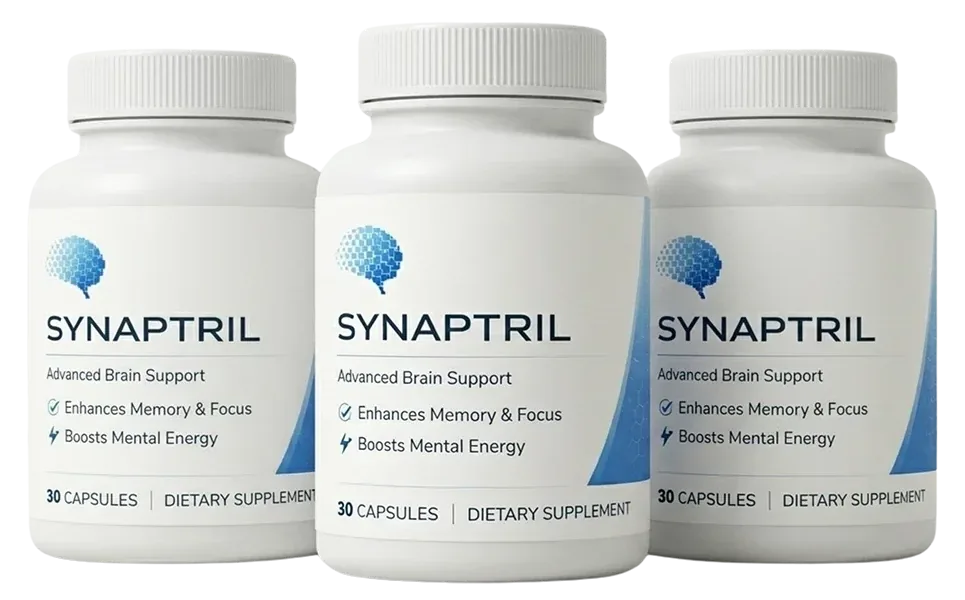
Synaptril's label says "Boosts Mental Energy*" and lists no caffeine. Its CoQ10 share is at most about 35 mg, while brain-disease trials used 300 to 2,400 mg (Linus Pauling Institute, Coenzyme Q10). The bars compare each ingredient's ceiling with studied doses.
More in brain fog supplements.
Track it08
How do you track brain fog before a doctor's visit?
Track brain fog for two weeks before your visit. A short daily log turns "I feel foggy" into a pattern a doctor can use.
Rate the fog
Give each afternoon a score from 0 to 3.
Note sleep and drinks
Write hours slept and any alcohol from the night before.
Mark changes
Flag new medicines, dose changes, illness or big stress.
Bring the log
Hand it over with your medicine list at the appointment.
FAQ09
Questions about brain fog causes
Can metformin cause brain fog?
Metformin can lower vitamin B12 over time, and low B12 can affect the nerves and memory. That does not mean metformin is the cause of your fog. Keep taking it as prescribed, and ask your doctor whether a B12 blood test makes sense for you.
Can acid reflux pills lead to brain fog?
They can play an indirect part. Acid-reducing drugs can lower vitamin B12, and proton pump inhibitors taken for over a year can lower magnesium. Ask your doctor whether testing either level is worth it. Do not stop a prescribed acid reducer on your own.
Can thyroid problems cause brain fog?
Yes. NIA lists thyroid problems among treatable causes of memory trouble, and MedlinePlus notes that blood tests for thyroid disease may be used to find the cause. Tell your doctor about any other changes you have noticed, even ones that seem unrelated.
Can regular drinking cause brain fog?
Yes, it can. NIA and MedlinePlus both list alcohol misuse among causes of memory problems, and NIA notes these causes often improve once addressed. Counting drinks for two weeks alongside a fog score is a simple way to see whether the two line up for you.
Is brain fog a sign of dementia?
Usually not. Most brain fog comes from sleep, stress, mood, medicines or low vitamins. Fog that keeps worsening, or comes with getting lost or losing words, needs a doctor's visit. Sudden confusion or slurred speech is an emergency, so call 911.
How many hours of sleep help prevent brain fog?
Most adults 18 to 60 need 7 or more hours a night, adults 61 to 64 need 7 to 9, and adults 65 and older need 7 to 8, according to the CDC. If fog stays after two weeks of steady sleep, look at the other causes and talk to your doctor.
Who wrote this10
Written and reviewed by
Pages built from the label, the sales page and linked NIH, FDA, CDC, FTC and peer-reviewed sources.
Last updated . Learn about our editorial standards and how we check reviews. This website is run by a U.S. retail partner of Synaptril, not by the manufacturer or the distributor. We make money when you buy through our order links.
Keep reading
Related Synaptril reading

U.S. retail partner of Synaptril
Ready to try Synaptril?
Check your medicines, then choose a pack. Packs of three or six bottles ship free at a lower price per bottle, and all of them carry the 60-day money-back guarantee.
- Secure BuyGoods checkout
- 60-day money-back guarantee
- Ships from the U.S.