Memory and aging
Memory Changes With Aging: What Is Normal?
Memory changes with aging are common and usually mild: a name that comes back an hour later, a word on the tip of the tongue, glasses left in the wrong room. Trouble that disrupts daily life, such as losing track of the season or struggling with bills, is not typical aging. See a doctor, because many causes are treatable.
Written by the Synaptril label deskUpdated
The basics01
What memory changes are normal with aging?
Normal memory changes with aging are small slips that you notice and fix yourself. You forget a word, then it comes to you later.
The National Institute on Aging lists these as typical: an occasional poor decision, a missed monthly bill, forgetting what day it is but remembering later, sometimes losing a word, and losing things now and then (NIA, Memory Problems and Aging).
The key word is "occasionally". A pattern that keeps getting worse, or that other people point out, deserves a closer look. Tap each card to sort it.
Tap each card to see where it falls. Then tap Sort them to group them.
Pairs from the National Institute on Aging (NIA, Memory Problems and Aging). One item alone is not a diagnosis. If changes are new, getting worse or worrying the people close to you, see a doctor (Alzheimer's Association, 10 Warning Signs). Sudden confusion, slurred speech or weakness on one side is an emergency: call 911.
Warning signs02
What are the warning signs of age-related memory loss?
Age-related memory loss becomes a warning sign when it disrupts daily life. Forgetting a recent conversation over and over, or getting lost on a familiar drive, is different from a slow name.
The Alzheimer's Association publishes ten warning signs and says to book a doctor's visit if you notice any. Early detection lets people look at treatments that may ease some symptoms (Alzheimer's Association, 10 Warning Signs).
| Warning sign | What it can look like at home |
|---|---|
| Memory loss that disrupts daily life | Asking the same question several times in one afternoon |
| Trouble planning or solving problems | A long-used recipe or monthly budget suddenly feels impossible |
| Confusion with time or place | Not sure of the season, or how they got somewhere |
| Misplacing things, unable to retrace steps | Keys turn up in the freezer, with no memory of how |
| Poor judgment, withdrawal, mood changes | Giving money to strangers, dropping hobbies, new suspicion or anxiety |
Sudden confusion, slurred speech, a drooping face or weakness on one side can mean a stroke. Call 911 right away.
Treatable causes03
What treatable problems can cause memory changes?
Many memory changes have causes a doctor can find and treat. NIA names medicine side effects, low vitamin B12, thyroid, kidney or liver problems, depression or anxiety, alcohol misuse, sleep problems and head injury (NIA, Memory Problems and Aging).
These often improve once treated, so a doctor's visit comes before any memory product (NCCIH, Supplements for Cognitive Function). A doctor will review your medicines and may order blood tests for vitamin levels and thyroid disease (MedlinePlus, Memory Loss).
Bring every bottle you take, supplements included, and tell all your providers about them (NCCIH, Using Dietary Supplements Wisely). Keep taking prescribed medicine exactly as directed while you wait for answers.
Low vitamin B12
Low B12 can cause numbness, tingling and memory changes, sometimes without anemia. Metformin and acid reducers can lower it (NIH ODS, Vitamin B12).
Medicines
Some prescription drugs, and overuse of opioids or sleeping pills, can blur memory. A pharmacist can flag which to raise (MedlinePlus, Memory Loss).
Mood and sleep
Depression, anxiety and poor sleep all show up as forgetfulness. Memory often lifts once they are treated (NIA, Memory Problems and Aging).
For the everyday version of this list, read what causes brain fog.
Risk factors04
Can you lower your risk of memory decline as you age?
Yes, in part. The 2024 Lancet Commission named 14 risk factors people can change, and estimated that addressing them could prevent or delay about 45% of dementia cases worldwide, if the links are causal (Lancet Commission on Dementia 2024).
Hearing loss, high blood pressure, inactivity, smoking and isolation are on the list, along with nine others.

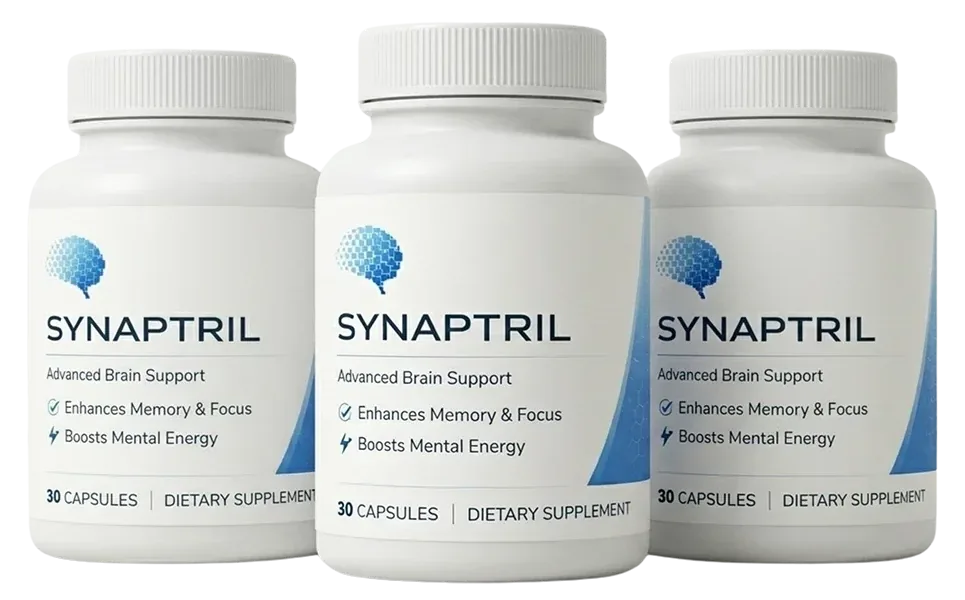
Synaptril: from $49 a bottle30 capsules · 2, 3 or 6 bottles · free shipping on 3 or 6 · 60-day guarantee
See packsDaily habits05
How much sleep and exercise does an aging brain need?
Adults 65 and older need 7 to 8 hours of sleep a night, and adults 61 to 64 need 7 to 9 (CDC, Sleep). For activity, the target is 150 minutes of moderate exercise a week, plus muscle work on 2 days (CDC, Physical Activity for Adults).
Thirty minutes of brisk walking on 5 days covers the 150. In the dial below, the capsule slot is optional; the walk and the bedtime are not.
- Breakfast, about 7:30
One capsule, if you take Synaptril. The label gives no time; a fixed anchor makes it easy to remember. Prescribed medicine keeps its own schedule.
- A focus block, 9 to 11:30
Hard thinking first, phone away. Timing your best work is a habit, not a supplement effect.
- Move in the afternoon
Adults need at least 150 minutes of moderate activity a week, per federal guidelines.
- Night, 7 or more hours
Adults need at least 7 hours of sleep. Short sleep shows up as poor focus and memory the next day.
Sleep guidance from CDC (CDC, Sleep); activity guidance from the federal guidelines (CDC, Physical Activity for Adults); risk factors for memory decline from the Lancet Commission (Lancet Commission on Dementia 2024). The time for the capsule is a suggestion; follow your label.
More on rest and recall in sleep and memory.
Supplements06
Do memory supplements help with memory changes with aging?
No supplement has been shown to stop memory changes with aging. According to NCCIH, there is no direct evidence that any supplement prevents dementia (NCCIH, Supplements for Cognitive Function).
In the GEM study, over 3,000 adults aged 75 or older took ginkgo or a placebo for a median of 6 years, with no difference in dementia rates (NCCIH, Ginkgo). An expert council convened by AARP could not endorse any brain supplement (AARP / GCBH, Brain Health Supplements 2019).
The signals are small. In COSMOS-Web, a daily multivitamin helped older adults recall word lists a little better, with no change on other memory tests (Yeung et al., Am J Clin Nutr 2023 (COSMOS-Web)). One 12-week magnesium glycinate trial helped only people over 65 (ADDF Cognitive Vitality, Magnesium).
Worked example07
Where does Synaptril fit for an older adult?
Synaptril is a once-a-day capsule labeled "Enhances Memory & Focus*", but no trial has tested it. Its one printed amount is 80 mg of magnesium.
That 80 mg sits well under the 350 mg supplement limit (NIH ODS, Magnesium). The other five ingredients share the rest of a 575 mg blend: at most about 175 mg, possibly near 8 mg.
The label asks anyone on a medication or with a medical condition to consult a physician first. See Synaptril claims and evidence.
See a doctor about new memory changes first. Fix sleep, activity and hearing next. If you still want to try a supplement, show the label to your pharmacist, then judge it honestly by day 60.
FAQ08
Questions about memory changes with aging
Is forgetting names a sign of dementia?
Usually not. Forgetting a name or a word now and then, and remembering it later, is listed by the National Institute on Aging as part of normal aging. It becomes a concern when it happens often, keeps getting worse, or comes with trouble holding a conversation or managing everyday tasks.
Can low vitamin B12 cause memory problems in older adults?
Yes. Low B12 can cause numbness, tingling and even dementia, sometimes without anemia. Older adults, vegans, people with stomach or gut disorders and people taking metformin or acid reducers are at higher risk. A simple blood test can check your level, so ask your doctor before you supplement.
Can prescription medicines cause memory loss?
Yes, some can. NIA and MedlinePlus both list medicine side effects among treatable causes of memory problems. Do not stop anything on your own. Bring every bottle to your doctor or pharmacist, ask which drugs could affect memory, and let your prescriber decide whether a change makes sense.
How many dementia risk factors can people change?
The 2024 Lancet Commission named 14 changeable risk factors, including hearing loss, high blood pressure, inactivity, smoking, diabetes and social isolation. It estimated that addressing all of them could prevent or delay about 45% of dementia cases worldwide, assuming the links it found are causal.
Did ginkgo stop dementia in the GEM study?
No. In the GEM study, more than 3,000 adults aged 75 or older took ginkgo or a placebo for a median of 6 years. Rates of dementia and Alzheimer's disease were the same in both groups, so the study offers no support for ginkgo as protection.
Should I see a doctor if a parent's memory is slipping?
Yes, if the changes disrupt daily life or keep getting worse. The Alzheimer's Association says not to ignore warning signs and to book an appointment. Write down examples and dates beforehand, and offer to go along, since a second view helps the doctor see the pattern.
Who wrote this09
Written and reviewed by
Pages built from the label, the sales page and linked NIH, FDA, CDC, FTC and peer-reviewed sources.
Last updated . Learn about our editorial standards and how we check reviews. This website is run by a U.S. retail partner of Synaptril, not by the manufacturer or the distributor. We make money when you buy through our order links.
Keep reading
Related Synaptril reading

U.S. retail partner of Synaptril
Ready to try Synaptril?
Check your medicines, then choose a pack. Packs of three or six bottles ship free at a lower price per bottle, and all of them carry the 60-day money-back guarantee.
- Secure BuyGoods checkout
- 60-day money-back guarantee
- Ships from the U.S.