Guides
Brain Supplement Guides: Memory, Focus and Safety
These brain supplement guides explain the health questions behind the bottle: how memory changes with age, what causes brain fog, which medicines interact, what nootropics and adaptogens are, and how to read ads. Each one puts your health first, uses Synaptril only as a worked example, and links every fact to a public source.
Written by the Synaptril label deskUpdated
The five guides01
What do the brain supplement guides cover?
The brain supplement guides cover five topics: normal memory changes, brain fog, medicine interactions, nootropics versus adaptogens, and supplement ads. Each answers the questions people search for, in plain words.
Memory changes with aging
What typical forgetfulness looks like, the warning signs, and the treatable causes a doctor can check.
What causes brain fog
Sleep, medicines, low B12, thyroid, mood and alcohol, with a first step for each.
Supplements and medicines
Warfarin, diabetes drugs, antibiotics, bone drugs and seizure medicines, with timing rules.
Where to start02
Which brain supplement guide should you read first?
Read the guide that matches your situation. If your memory has changed lately, start with memory and aging, because a doctor's visit comes before any capsule.
| Your situation | Start with |
|---|---|
| A parent keeps repeating questions | Memory changes with aging |
| Afternoons feel slow and cloudy | Brain fog causes |
| You take warfarin, metformin or an antibiotic | Supplements and medicines |
| A friend swears by an herbal stress blend | Nootropics vs adaptogens |
| An ad promises sharper memory in weeks | Reading brain supplement ads |
The evidence03
Do brain supplements work for memory and focus?
Brain supplements have not been shown to protect memory or focus in a reliable way. According to NCCIH, there is no direct evidence that any supplement prevents dementia (NCCIH, Supplements for Cognitive Function).
An expert council convened by AARP could not endorse any supplement for brain health and pointed to exercise, diet, sleep, mental challenge and social contact instead (AARP / GCBH, Brain Health Supplements 2019). A large ginkgo trial found no difference in dementia rates after a median of 6 years (NCCIH, Ginkgo).
One modest bright spot: a daily multivitamin slightly improved word-list recall in older adults (Yeung et al., Am J Clin Nutr 2023 (COSMOS-Web)).
The market04
How big is the brain supplement market?
The brain supplement market is large for a category with so little proof. AARP research found that 26% of U.S. adults 50 and older take a supplement for brain health, and sales reached about 3 billion dollars in 2016 (AARP / GCBH, Brain Health Supplements 2019).
How we check05
How does the label desk check a brain supplement?
We read the bottle line by line, do the arithmetic, then compare each ingredient with published research. The same method runs through every guide.
Read the label
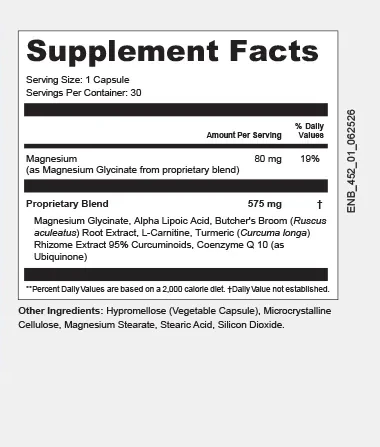
Synaptril lists 80 mg of magnesium inside a 575 mg blend of six ingredients.
Do the math
Magnesium glycinate is about 14% magnesium (GlobalRPH, Magnesium Glycinate). 80 mg needs about 567 mg of it, so 575 minus 567 leaves about 8 mg for the other five.
Check the studies
Compare that room with the doses used in trials.
Check medicines and ads
Flag interactions, and test each claim against the evidence.
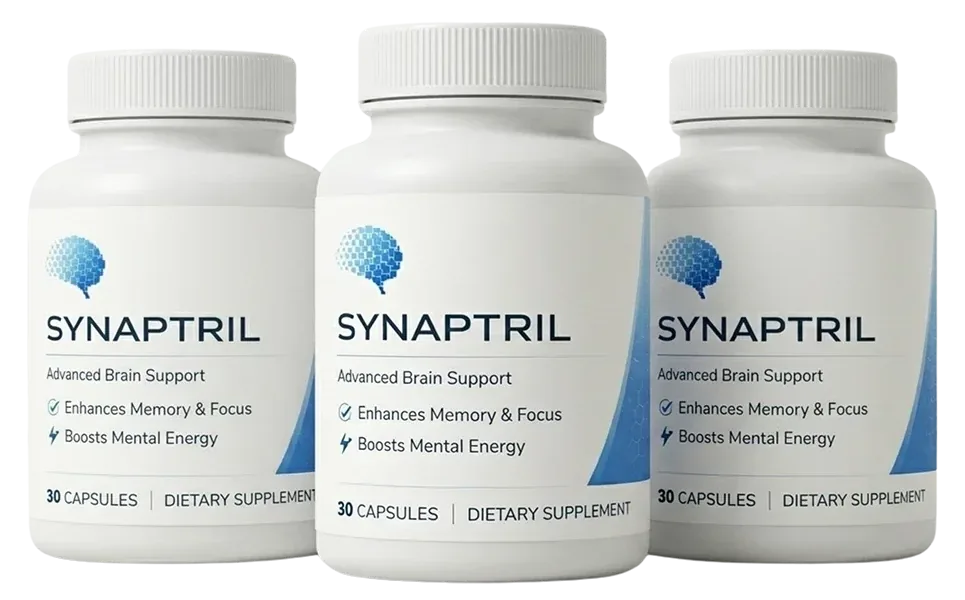
Synaptril: from $49 a bottle30 capsules · 2, 3 or 6 bottles · free shipping on 3 or 6 · 60-day guarantee
See packsBefore any capsule06
What should come before any brain supplement?
Sleep, movement and a doctor's check come first. Adults need 7 or more hours of sleep (CDC, Sleep) and 150 minutes of moderate activity a week (CDC, Physical Activity for Adults).
The 2024 Lancet Commission named 14 changeable risk factors and estimated that addressing them could prevent or delay about 45% of dementia cases (Lancet Commission on Dementia 2024). None of them is a missing supplement.
A supplement never replaces it. Sudden confusion, slurred speech, a drooping face or weakness on one side means call 911.
From the blog07
What are the newest brain supplement articles?
The blog answers narrower questions, one per article, from magnesium timing to refund steps.
Nootropics vs Prescription Stimulants: What's the Difference?
Why a nootropic supplement and a prescription stimulant are different things, and why one cannot stand in for the other.
Read the article
Magnesium Glycinate vs Magnesium L-Threonate
Two magnesium forms sold for the brain, what the few small trials found, and which one Synaptril uses.
Read the article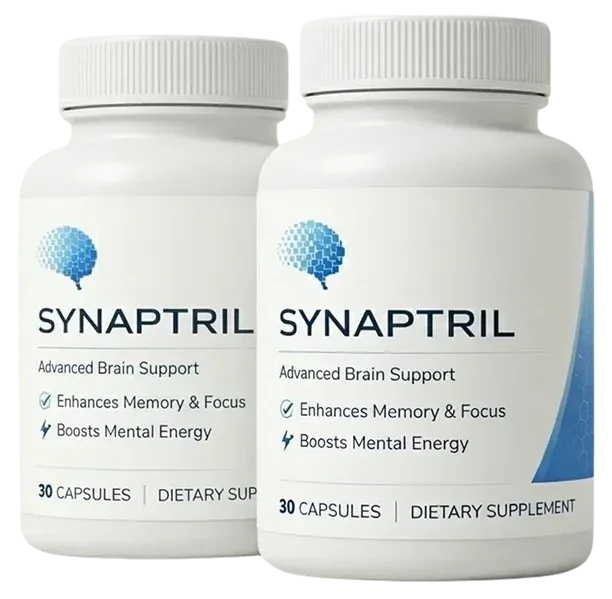
Brain Supplement vs Coffee for Focus
Coffee has proven alertness effects; a stimulant-free capsule like Synaptril has none shown. Compare them fairly.
Read the articleSee every post on the Synaptril blog.
Sources08
Where do the guides get their facts?
The guides rely on public health agencies, regulators and peer-reviewed reviews: NIH, CDC, FDA, FTC, Cochrane and the Lancet. Each claim carries a numbered citation.
Read our editorial standards for how sources are chosen. The main references for this hub:
- 7 Things To Know About Dietary Supplements for Cognitive Function, Dementia, and Alzheimer's Disease. National Center for Complementary and Integrative Health (NIH), 2026.NCCIH says 'direct evidence that dietary supplements can prevent Alzheimer's disease or other forms of dementia is lacking.' There is no conclusive evidence that ginkgo prevents or slows dementia, evidence for curcumin is too limited and inconsistent to support any conclusion, and short-term B-vitamin supplementation has not improved cognition in older adults. Memory loss should be evaluated by a health care provider because treatable conditions (depression, medication reactions, thyroid, liver or kidney problems) can impair memory.
- AARP Report Discourages Use of Dietary Supplements for Brain Health (Global Council on Brain Health: The Real Deal on Brain Health Supplements). AARP / Global Council on Brain Health, 2019.The Global Council on Brain Health could not endorse any supplement ingredient, product or formulation for brain health and advised most people against taking supplements for that purpose, finding they do not improve brain health or prevent cognitive decline or dementia. AARP research found 26% of U.S. adults 50 and older take a supplement for brain health, and brain-health supplements had 3 billion dollars in sales in 2016. It recommends exercise, a healthy diet, good sleep, mentally challenging activities and social connection instead.
- Dementia prevention, intervention, and care: 2024 report of the Lancet standing Commission. Livingston G, Huntley J, Liu KY, et al. (The Lancet 404(10452):572-628), 2024.The Commission identified 14 modifiable risk factors: less education, hearing loss, high LDL cholesterol, depression, traumatic brain injury, physical inactivity, diabetes, smoking, hypertension, obesity, excessive alcohol, social isolation, air pollution and untreated vision loss. Addressing them could potentially prevent or delay about 45% of dementia cases worldwide (assuming the associations are causal); high LDL cholesterol and vision loss were the two factors newly added in 2024.
- About Sleep. Centers for Disease Control and Prevention, 2023.Adults 18-60 need 7 or more hours of sleep per night, adults 61-64 need 7-9 hours, and adults 65 and older need 7-8 hours.
- Adult Activity: An Overview (Physical Activity Guidelines for Americans). Centers for Disease Control and Prevention, 2023.Adults need 150 minutes a week of moderate-intensity activity such as brisk walking (for example, 30 minutes a day, 5 days a week), or 75 minutes of vigorous activity, or an equivalent mix. They also need muscle-strengthening activities working all major muscle groups on at least 2 days a week.
- Ginkgo. National Center for Complementary and Integrative Health (NIH), 2025.In the NIH-funded Ginkgo Evaluation of Memory (GEM) study, more than 3,000 adults aged 75 or older with normal cognition or mild cognitive impairment took ginkgo or placebo for a median of 6 years; there was no difference in rates of dementia or Alzheimer's disease. Ginkgo may increase bleeding risk with anticoagulants such as warfarin.
- Multivitamin Supplementation Improves Memory in Older Adults: A Randomized Clinical Trial. Yeung LK, Alschuler DM, Wall M, et al. (American Journal of Clinical Nutrition 118(1):273-282), 2023.In 3,562 older adults randomized to a daily multivitamin (Centrum Silver) or placebo and tested online yearly for 3 years, the multivitamin group had better immediate word-list recall at 1 year (the primary outcome, P=0.025) and on average over 3 years (P=0.011). The authors estimated the benefit was equivalent to 3.1 years of age-related memory change, but the multivitamin had no significant effects on secondary outcomes (3-year episodic memory, object recognition, executive function).
FAQ09
Questions about these guides
Are these guides written to sell Synaptril?
No. The guides are written to answer health questions first, and they say plainly when the evidence for supplements, Synaptril included, is weak. The site does earn money from order links, as the site discloses, and the guides use Synaptril only as a worked example.
What share of older adults take a brain supplement?
About one in four. AARP research found that 26% of U.S. adults aged 50 and older take a supplement for brain health. Brain-health supplements had about 3 billion dollars in sales in 2016, even though experts could not endorse any of them.
Is there a brain supplement that experts endorse?
No. The Global Council on Brain Health, convened by AARP, could not endorse any supplement ingredient, product or formula for brain health. It advised most people not to take them for that purpose and pointed to exercise, diet, sleep, learning and social contact instead.
Do the guides replace advice from my doctor?
No. The guides explain what the research says so you can ask better questions. They cannot examine you or read your test results. New memory changes, ongoing brain fog or a question about your medicines all belong with your doctor or pharmacist.
Which guide covers brain supplement scams?
The guide on reading brain supplement ads covers it. It explains structure/function claims, the FTC's proof standard, fake reviews, paid advertorials, the 2019 FDA warning letters and the Prevagen court case, then tests Synaptril's own claims and badges against the evidence.
When were the brain supplement guides last checked?
The current versions were checked on October 18, 2026, and each guide shows its update date near the top. Prices and policies were read from the official order page that same day.
Who wrote this10
Written and reviewed by
Pages built from the label, the sales page and linked NIH, FDA, CDC, FTC and peer-reviewed sources.
Last updated . Learn about our editorial standards and how we check reviews. This website is run by a U.S. retail partner of Synaptril, not by the manufacturer or the distributor. We make money when you buy through our order links.
Keep reading
Related Synaptril reading
U.S. retail partner of Synaptril
Ready to try Synaptril?
Check your medicines, then choose a pack. Packs of three or six bottles ship free at a lower price per bottle, and all of them carry the 60-day money-back guarantee.
- Secure BuyGoods checkout
- 60-day money-back guarantee
- Ships from the U.S.