Nootropics vs adaptogens
Nootropics vs Adaptogens: What Is the Difference?
Nootropics vs adaptogens comes down to the target. Nootropics are substances meant to improve thinking, such as memory and learning. Adaptogens are herbs said to raise the body's general resistance to stress. Both labels are loose, and evidence for both is limited. Synaptril is sold like a nootropic and lists no classic adaptogen.
Written by the Synaptril label deskUpdated
Short answer01
What is the difference between adaptogens and nootropics?
The difference between adaptogens and nootropics is what they aim at. Nootropics aim at thinking: memory, learning and attention. Adaptogens aim at the stress response: helping the body hold steady under strain.
The words also come from different traditions. "Nootropic" was coined by a scientist in the early 1970s (Malik & Tlustos, Nutrients 2022). "Adaptogen" is used mostly for stress-protective herbs such as Rhodiola and Eleuthero (Panossian & Wikman, Pharmaceuticals 2010).
In shops the line blurs. Many products sold as nootropics contain herbs, and many adaptogen blends promise focus.
| Nootropics | Adaptogens | |
|---|---|---|
| Meant for | Memory, learning, attention | General resistance to stress |
| Where the word comes from | Coined by Cornelius Giurgea, early 1970s (Malik & Tlustos, Nutrients 2022) | Research on stress-protective herbs (Panossian & Wikman, Pharmaceuticals 2010) |
| Typical examples | A mixed group of compounds, from drugs to nutrients (Malik & Tlustos, Nutrients 2022) | Rhodiola rosea, Schisandra chinensis, Eleutherococcus senticosus (Panossian & Wikman, Pharmaceuticals 2010) |
| Evidence quality | Few studies in healthy people; long-term effects unknown (Malik & Tlustos, Nutrients 2022) | Rigor varies; many trials small (Panossian & Wikman, Pharmaceuticals 2010) |
| FDA approval as supplements | None: FDA does not approve dietary supplements before sale (FDA, Questions and Answers on Dietary Supplements) | |
Nootropics02
What are nootropics?
Nootropics are compounds that mainly act on thinking, such as memory and learning, especially when those are impaired. The term was coined by Cornelius Giurgea in the early 1970s (Malik & Tlustos, Nutrients 2022).
Today the word covers a mixed bag, sometimes sold as "smart drugs". A 2022 review calls their use by healthy people "of great concern" because clinical evidence on efficacy and safety is lacking (Malik & Tlustos, Nutrients 2022).
The review also notes few studies in healthy young people, and that long-term effects in healthy people are still unknown. More background is in what are nootropics.
Adaptogens03
What are adaptogens?
Adaptogens are herbs first defined as substances that "enhance the state of non-specific resistance in stress" (Panossian & Wikman, Pharmaceuticals 2010). In plain words: they are meant to help the body cope with strain in general, not fix one organ.
A well-cited review focuses on three: Rhodiola rosea, Schisandra chinensis and Eleutherococcus senticosus. Its authors, from an herbal research institute, note that most earlier reviews were narrative, study rigor varies and many trials were small (Panossian & Wikman, Pharmaceuticals 2010).
So adaptogens are a plausible idea with patchy proof. That is not the same as "no effect", and it is not the same as proven.
Worked example04
Is Synaptril a nootropic or an adaptogen?
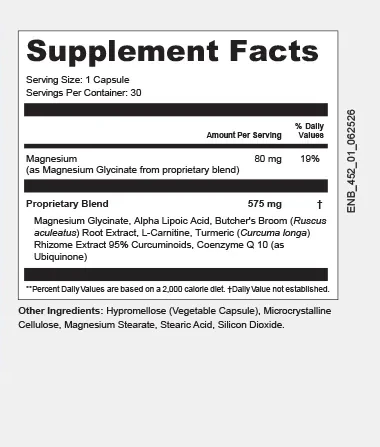
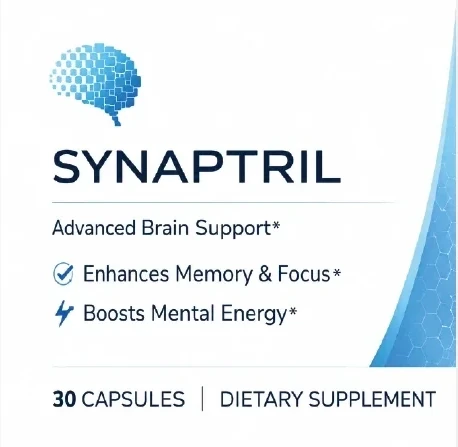
Synaptril is sold like a nootropic. Its label says "Enhances Memory & Focus*", and none of its six ingredients is one of the three classic adaptogens.
The blend is magnesium glycinate, alpha lipoic acid, butcher's broom, L-carnitine, turmeric extract and CoQ10. Some third-party articles list Rhodiola in Synaptril. The label does not, so trust the bottle.
Amounts matter as much as names. Magnesium glycinate is about 14% magnesium (GlobalRPH, Magnesium Glycinate), so the printed 80 mg of magnesium needs roughly 567 mg of the 575 mg blend. Even on a generous reading, the other five share at most 175 mg. L-carnitine, fourth in line, gets at most about 58 mg, while the memory research used acetyl-L-carnitine at 1.5 to 3 g a day (NIH ODS, Carnitine).
That gap is typical of blends sold as nootropics: the ingredient may have a study, but not at the dose in the capsule. The full arithmetic is on how Synaptril works.
Filter the six lines by group below. Most fall into minerals and cell-energy nutrients, which fit neither label neatly.
- 1Magnesium Glycinate (magnesium 80 mg, 19% DV)Line 1 · 80 mg magnesium (19% DV)
- 2Alpha Lipoic AcidLine 2 · at most 175 mg per capsule
- 3Butcher's Broom (Ruscus aculeatus) Root ExtractLine 3 · at most 88 mg per capsule
- 4L-CarnitineLine 4 · at most 58 mg per capsule
- 5Turmeric (Curcuma longa) Rhizome Extract 95% CurcuminoidsLine 5 · at most 44 mg per capsule
- 6Coenzyme Q 10 (as Ubiquinone)Line 6 · at most 35 mg per capsule
From the Supplement Facts panel. The six lines are the 575 mg blend, listed from most to least by weight (21 CFR 101.36, Supplement Facts). Other ingredients (the vegetable capsule, cellulose, magnesium stearate, stearic acid, silicon dioxide) are not counted.
Mental energy05
Do nootropics or adaptogens boost mental energy?
Neither has strong proof for mental energy. Researchers define mental energy as mood, motivation and sustained attention, and after reviewing about 2,500 studies they found inconsistent evidence for ginseng and glucose, and mixed evidence for ginkgo and omega-3s (Tufts, Mental Energy Claims).
Caffeine was left out of that review because its evidence was already strong (Tufts, Mental Energy Claims). Synaptril lists no caffeine, so its "Boosts Mental Energy*" claim cannot lean on it.
Synaptril: from $49 a bottle30 capsules · 2, 3 or 6 bottles · free shipping on 3 or 6 · 60-day guarantee
See packsBy the numbers06
How strong is the evidence for nootropics and adaptogens?
The evidence for both is thin. Neither group has a large body of long, well-run trials in healthy adults (Malik & Tlustos, Nutrients 2022) (Panossian & Wikman, Pharmaceuticals 2010).
Safety07
Are nootropics and adaptogens safe to take together?
Nobody can promise that a mix of nootropics and adaptogens is safe, because long-term effects are unknown (Malik & Tlustos, Nutrients 2022). "Natural" does not always mean safe, and supplements can interact with medicines (NCCIH, Using Dietary Supplements Wisely).
Keep taking prescribed medicine, and show every bottle to your pharmacist before you stack products. See supplement drug interactions.
Choosing08
How do you choose between a nootropic and an adaptogen?
Choose by the problem, not the label. Fuzzy thinking points to a nootropic-style product; feeling run down by stress points to an adaptogen. Either way, check the basics first.
Rule out causes
Sleep, medicines and low B12 explain a lot. See brain fog causes.
Read the amounts
A blend that hides doses is hard to judge.
Look for a product trial
Ingredient studies are not tests of the product.
Ask your pharmacist
Bring the bottle and your medicine list.
FAQ09
Questions about nootropics and adaptogens
Is Rhodiola an adaptogen or a nootropic?
Rhodiola rosea is an adaptogen. It is one of the three herbs at the center of adaptogen research, alongside Schisandra and Eleutherococcus. Products sold for focus sometimes include it, which is why the two labels blur. Rhodiola does not appear on the Synaptril label.
Who coined the word nootropic?
Cornelius Giurgea coined the word in the early 1970s. He used it for substances that mainly act on thinking, such as memory and learning, especially when impaired. Today the term is used far more loosely, often for any product sold to help focus.
Does Synaptril contain any adaptogens?
No classic adaptogen is listed. Synaptril's blend is magnesium glycinate, alpha lipoic acid, butcher's broom, L-carnitine, turmeric extract and CoQ10. Some third-party articles list Rhodiola, but it is not on the label. Go by the Supplement Facts panel on the bottle.
Are nootropics safe for healthy young adults?
Nobody knows for sure. A 2022 review notes few studies of nootropics in healthy young people and says long-term effects in healthy individuals are still unknown. It calls their use by healthy people a concern for that reason. Ask a doctor before trying them.
What does non-specific resistance mean for adaptogens?
It means a general ability to cope with stress, rather than an effect on one organ or one illness. Adaptogens were first defined as substances that raise this resistance. The idea is broad, which is one reason trials of adaptogens are hard to compare.
Is magnesium glycinate a nootropic?
Not in any proven sense. A research review says it is not known whether magnesium supplements improve thinking. One 12-week magnesium glycinate trial found a gain only in people over 65. Magnesium is better described as a mineral the body needs every day.
Do adaptogens help memory?
That has not been shown. The main review of adaptogens centers on resistance to stress, not memory, and it notes that many trials were small and varied in quality. If memory is your concern, a doctor's check for treatable causes comes first.
Who wrote this10
Written and reviewed by
Pages built from the label, the sales page and linked NIH, FDA, CDC, FTC and peer-reviewed sources.
Last updated . Learn about our editorial standards and how we check reviews. This website is run by a U.S. retail partner of Synaptril, not by the manufacturer or the distributor. We make money when you buy through our order links.
Keep reading
Related Synaptril reading
U.S. retail partner of Synaptril
Ready to try Synaptril?
Check your medicines, then choose a pack. Packs of three or six bottles ship free at a lower price per bottle, and all of them carry the 60-day money-back guarantee.
- Secure BuyGoods checkout
- 60-day money-back guarantee
- Ships from the U.S.