Reading brain supplement ads
How to Read Brain Supplement Ads
Brain supplement ads use legal wording, an asterisk, badges and reviews to sound stronger than the evidence. Ask four things: is there a human trial of this exact product, are the amounts printed, who stands behind each badge, and are the reviews verified? Federal regulators have acted against memory claims that went too far.
Written by the Synaptril label deskUpdated
The rules01
What can brain supplement ads legally claim?
Brain supplement ads may make structure/function claims, such as "supports memory", but not disease claims. FDA does not approve supplements or their claims before sale, and the maker must hold its own proof (FDA, Questions and Answers on Dietary Supplements).
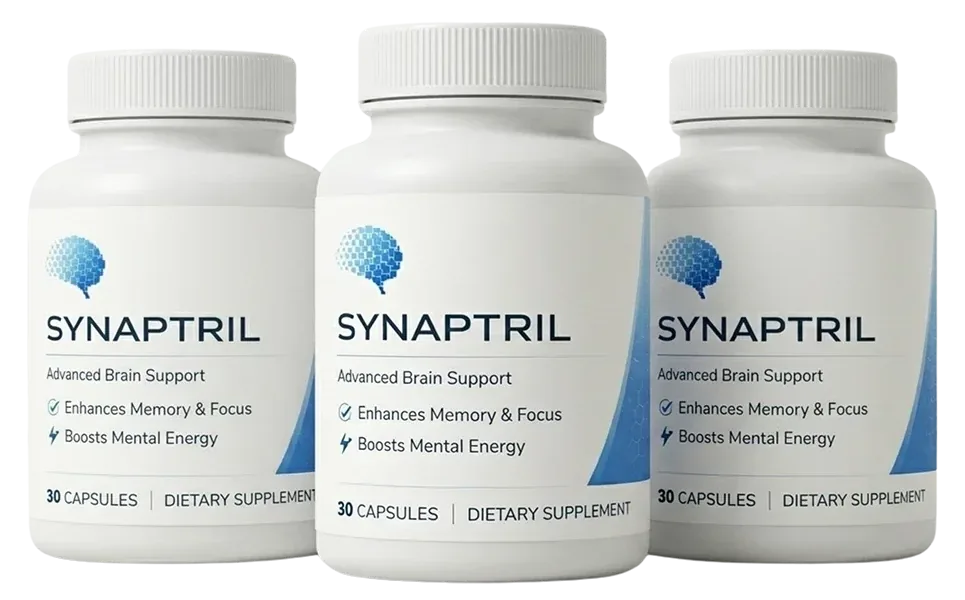
Each such claim must carry a disclaimer. Synaptril's label shows the standard one: *These statements have not been evaluated by the Food and Drug Administration. This product is not intended to diagnose, treat, cure or prevent any disease.
That asterisk is the most honest line in most ads. It tells you no government agency checked the claim.
Proof02
What proof does the FTC expect behind brain supplement ads?
The FTC expects "competent and reliable scientific evidence", generally randomized controlled trials with clinically meaningful results (FTC, Health Products Compliance Guidance). Animal and test-tube studies are not enough on their own.
Testimonials do not count as proof. Soft words like "may" or "helps" generally do not rescue a weak claim, and the FDA disclaimer does not make a deceptive claim acceptable (FTC, Health Products Compliance Guidance).
| Ad wording | Question to ask |
|---|---|
| "Supports memory" | Was this exact product tested in people? |
| "Backed by science" | Is the science about the product, or one ingredient at a higher dose? |
| "May help focus" | Does "may" hide the lack of a trial? |
| Star ratings and quotes | Are the buyers verified and the reviews unpaid? |
| "Proprietary blend" | How much of each ingredient is in a serving? |
Case study03
What happened in the Prevagen case?
The Prevagen case is the clearest test of brain supplement ads in court. The FTC and the New York Attorney General sued its maker, Quincy Bioscience, in January 2017 (FTC & NY AG v. Quincy Bioscience (Prevagen)).
The FTC said the company's own Madison Memory Study, with 218 subjects, found no statistically significant benefit over placebo on any of nine cognitive tasks (FTC & NY AG v. Quincy Bioscience (Prevagen)).
- January 2017
FTC and New York Attorney General file suit.
- March 11, 2024
A federal jury finds none of eight memory claims supported by competent and reliable evidence. Two, "reduces memory problems associated with aging" and its "clinically shown" version, are found materially misleading.
- December 6, 2024
Judge Louis L. Stanton bars all eight statements but denies New York's requests for penalties and disgorgement.
- February 2026
Quincy's appeal is still pending at the Second Circuit.
Longer write-up: the Prevagen lawsuit.
Warning letters04
Why did the FDA warn sellers about Alzheimer's claims?
On February 11, 2019, FDA sent 12 warning letters and 5 online advisory letters to companies selling more than 58 products that claimed to treat or prevent Alzheimer's disease (FDA, Alzheimer's claims warning letters 2019). Many were sold as dietary supplements.
FDA's concern was practical: unproven products may be unsafe or useless, and they can keep people from getting a proper diagnosis and treatment. It had already sent over 40 such letters in the prior five years (FDA, Alzheimer's claims warning letters 2019).
Worked example05
How do you check brain supplement ad claims against the evidence?
Line up each claim with what the research actually shows. Synaptril makes a good test case: three claims on the front, ten badges in its image set, and no trial of the product.
The list pairs each claim and badge with the evidence we found.
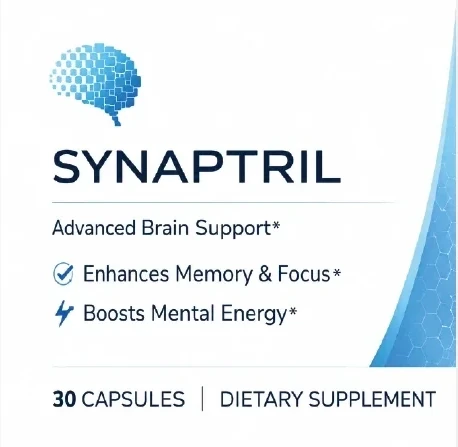
- Label front“Advanced Brain Support*”No trial has tested Synaptril. Structure/function wording with the FDA asterisk; it is not a claim to treat any disease. (FDA, Questions and Answers on Dietary Supplements)
- Label front“Enhances Memory & Focus*”Reviews of brain supplements find no proof that any of them prevents memory decline. None of the six ingredients has strong memory evidence at these amounts. (NCCIH, Supplements for Cognitive Function) (AARP / GCBH, Brain Health Supplements 2019)
- Label front“Boosts Mental Energy*”No caffeine or other stimulant is on the label. Researchers define mental energy as mood, motivation and sustained attention, and supplement evidence for it is inconsistent. (Tufts, Mental Energy Claims)
- Brand badge“Doctor Formulated”No formulator is named on the label, the order page or the badge. (FTC, Health Products Compliance Guidance)
- Brand badge“Registered FDA Facility”The label prints no facility statement. Registration, where it exists, is not FDA approval. (FDA, Questions and Answers on Dietary Supplements)
- Brand badge“100% Natural Ingredients”No certifier is named. The capsule also lists flow agents such as silicon dioxide and magnesium stearate. (NCCIH, Using Dietary Supplements Wisely)
- Bottle backThe FDA statement'Not intended to diagnose, treat, cure or prevent any disease.' That line is accurate, and it is the one to keep in mind. (FDA, Questions and Answers on Dietary Supplements)
Claims as printed on the label and the brand badges. A health claim needs competent and reliable scientific evidence, generally from human trials of the same product (FTC, Health Products Compliance Guidance).
Synaptril: from $49 a bottle30 capsules · 2, 3 or 6 bottles · free shipping on 3 or 6 · 60-day guarantee
See packsBadges06
What do badges in brain supplement ads mean?
Badges are claims by the seller, not certificates. A "GMP certified" or "FDA registered" badge means little unless it names a certifier, a facility or an audit date.
FDA registration is not approval (FDA, Questions and Answers on Dietary Supplements). Each of Synaptril's ten badges is shown with an honest note.
A brand badge. There is no factory, certifier or audit date on the label.
A brand badge. The label prints no facility statement, and FDA registration is not approval.
A badge from the brand. The label itself names no country of manufacture.

A brand badge. No outside certification is printed on the label.

A brand badge. No certifier is named, and the capsule also lists flow agents such as silicon dioxide and magnesium stearate.
A brand badge. No formulator is named or credentialed.

A brand badge. No gluten test or certifier is named.
A brand badge. No dairy appears in the listed ingredients.

A brand badge. The capsule is hypromellose, a plant-based shell; the stearate sources are not stated.

Matches the sales page: a 60-day money-back guarantee.
The badges all come from the brand's own image set. A badge is a claim by the seller, not a certificate: none names a certifier, lab or audit. FDA does not approve supplements before they are sold (FDA, Questions and Answers on Dietary Supplements), and health claims in ads need real evidence (FTC, Health Products Compliance Guidance).
Reviews and advertorials07
How can you spot fake reviews and paid advertorials?
Since October 21, 2024, an FTC rule bans fake reviews, AI-written testimonials, paid reviews tied to a positive sentiment, and company-run "independent" review sites (FTC, Fake Reviews Final Rule 2024).
Paid advertorials are a separate trap. Several Synaptril articles on newswire sites are labeled "paid advertorial" in small print, and some list ingredients the label does not, such as Rhodiola or phosphatidylserine.
- Look for "advertorial" or an affiliate note near the top or bottom.
- Compare any ingredient list with the label itself.
- Treat a rating with no verified buyers as decoration.
Before you order08
What should you check before buying from a brain supplement ad?
Check the label, the guarantee terms and your medicines before you buy from any ad. Keep taking prescribed medicine; no supplement replaces it.
For Synaptril, that means a 60-day window from purchase, return postage you pay, and a pharmacist's look at the CoQ10 and magnesium lines. Our is Synaptril legit review walks through each point.
FAQ09
Questions about brain supplement ads
Are brain supplement ads checked by the FDA before they run?
No. FDA does not approve dietary supplements or their claims before they are marketed. The maker is responsible for having proof that its claims are truthful. The FTC can act afterward against ads it finds misleading, as it did in the Prevagen case.
What does the asterisk on a brain supplement claim mean?
The asterisk points to a required disclaimer: the statement has not been evaluated by FDA, and the product is not intended to diagnose, treat or prevent any disease. It marks a structure/function claim. It does not mean a regulator reviewed the evidence behind the claim.
Is the Prevagen lawsuit over?
Not fully. A jury ruled against eight of Prevagen's memory claims in March 2024, and the judge barred those statements in December 2024. The maker, Quincy Bioscience, appealed, and the Second Circuit appeal was still pending as of February 2026.
Is a paid advertorial the same as a news article?
No. A paid advertorial is an ad written to look like news, often posted on newswire sites. It usually carries a small disclosure and affiliate links. Treat its claims as marketing, and check every ingredient it names against the actual product label.
Can an ad call a supplement clinically tested if only one ingredient was studied?
It should not imply the product itself was tested. The FTC looks at the whole body of evidence and generally expects trials that match the product. A study of one ingredient at a higher dose does not show that a small amount in a blend works.
Are star ratings in brain supplement ads reliable?
Often not on their own. The FTC now bans fake and bought reviews, but a star rating shown without verified buyers tells you little. We publish no Synaptril ratings yet, because none has been matched to a real order.
Who wrote this10
Written and reviewed by
Pages built from the label, the sales page and linked NIH, FDA, CDC, FTC and peer-reviewed sources.
Last updated . Learn about our editorial standards and how we check reviews. This website is run by a U.S. retail partner of Synaptril, not by the manufacturer or the distributor. We make money when you buy through our order links.
Keep reading
Related Synaptril reading
U.S. retail partner of Synaptril
Ready to try Synaptril?
Check your medicines, then choose a pack. Packs of three or six bottles ship free at a lower price per bottle, and all of them carry the 60-day money-back guarantee.
- Secure BuyGoods checkout
- 60-day money-back guarantee
- Ships from the U.S.