Coenzyme Q10
Coenzyme Q10 in Synaptril: Does It Reach the Brain?
CoQ10 for the brain has no proven memory benefit: brain-disease trials at 300 to 2,400 mg a day found no cognitive gain. Synaptril lists coenzyme Q10 as ubiquinone, the last of six blend lines. Blend math caps it at about 35 mg a capsule, and under 5% of oral CoQ10 reaches the blood.
Written by the Synaptril label deskUpdated
The basics01
What is CoQ10, and why is it in a brain supplement?
CoQ10, or coenzyme Q10, is a compound that helps mitochondria turn food into usable energy. It turns up in brain supplements because the brain uses a lot of energy, but CoQ10 for the brain is an idea more than a proven result.
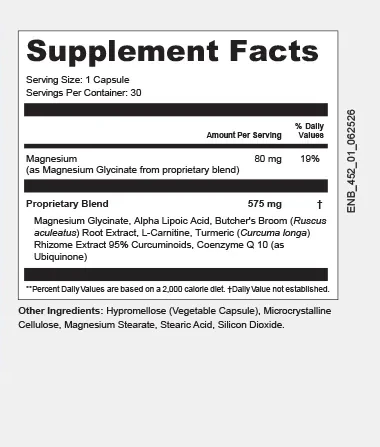
Synaptril lists "Coenzyme Q 10 (as Ubiquinone)" as the sixth and last line of its 575 mg blend. Ubiquinone is the common supplement form. No amount is printed.
Last place matters. Blends list ingredients from most to least by weight (21 CFR 101.36, Supplement Facts), so CoQ10 is the smallest of the six.
| Name on the label | Coenzyme Q 10 (as Ubiquinone) |
|---|---|
| What it is | Ubiquinone, a cofactor in cell energy production |
| Place on the label | Line 6 of 6 in the 575 mg proprietary blend |
| Amount per capsule | At most 35 mg (label order and magnesium math); 96 mg by label order alone |
| Amount used in research | 30-300 mg a day in heart trials; 300-2,400 mg in brain-disease trials |
| Strength of evidence | No cognitive benefit shown |
| Marketed or traditional use | Part of the energy chain in mitochondria |
| Main caution | May weaken warfarin; trouble sleeping or stomach upset. |
The evidence02
Does CoQ10 help memory or brain health?
No, CoQ10 has not been shown to help memory or thinking. Large trials in brain diseases used very high doses and found no cognitive benefit.
A phase III Huntington's disease trial gave 2,400 mg a day and found no gain in function or thinking (Linus Pauling Institute, Coenzyme Q10). A major NIH-funded study in Parkinson's disease found no symptom improvement, even at high doses (NCCIH, Coenzyme Q10).
| Area | Daily amount studied | Result |
|---|---|---|
| Huntington's disease | 2,400 mg | No functional or cognitive improvement |
| Parkinson's disease | High doses | No symptom improvement |
| Neurological trials overall | 300-2,400 mg | No memory benefit shown |
| Heart failure | 30-300 mg | Inconclusive |
Absorption03
Does CoQ10 reach the brain when you swallow it?
Very little oral CoQ10 even reaches the blood: less than 5% of a dose is thought to get into circulation (Linus Pauling Institute, Coenzyme Q10). What then reaches the brain has not been shown in the sources we use.
CoQ10 absorbs best with a fatty meal (Linus Pauling Institute, Coenzyme Q10). The Synaptril label gives no food rule, so taking the capsule with a meal that has some fat is a reasonable habit, not a label instruction.
Ubiquinone is the form named on the bottle. The ubiquinol vs ubiquinone post covers the other form you will see on shelves.
Blend math04
How much CoQ10 is in a Synaptril capsule?
A Synaptril capsule holds at most about 35 mg of CoQ10, and likely less. That is near the bottom of what retail CoQ10 products give.
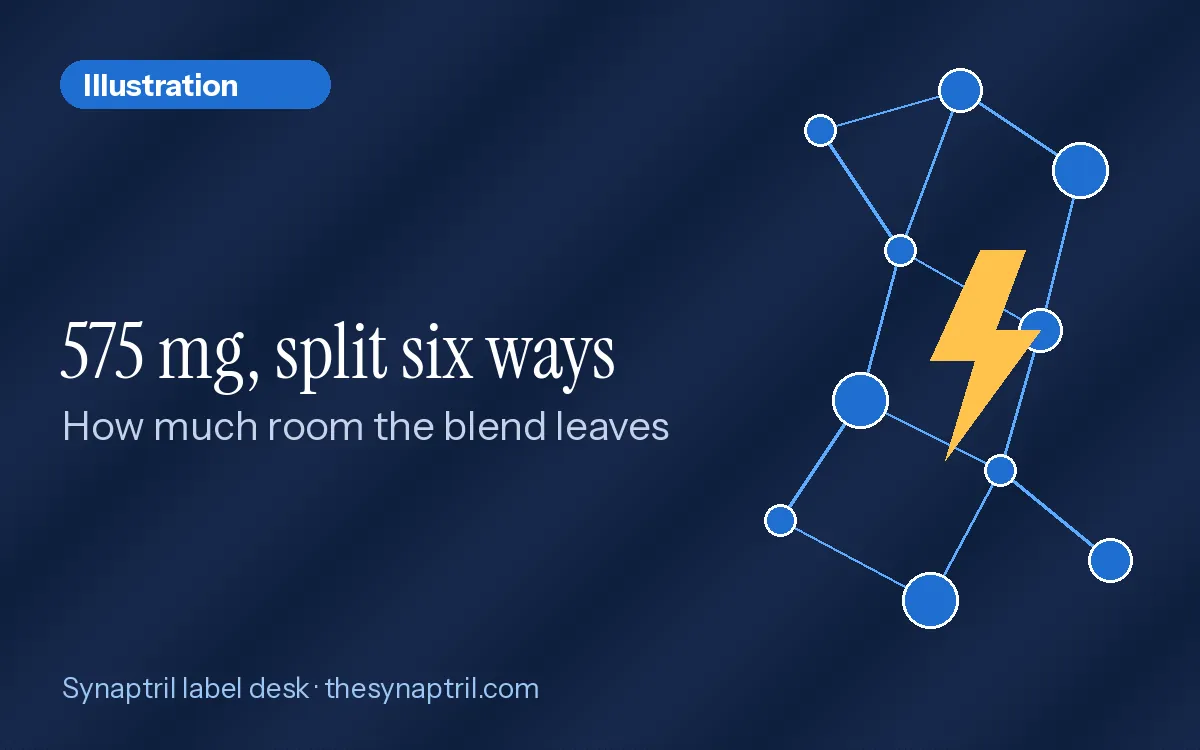
Magnesium glycinate is about 14% magnesium (GlobalRPH, Magnesium Glycinate), so 80 mg of magnesium takes about 567 mg of it. That leaves around 8 mg of the 575 mg blend for five ingredients. With a richer 20% grade, 175 mg is left.
CoQ10 is sixth, so it cannot outweigh any of the five lines above it. That caps it at 175 divided by 5, about 35 mg. An even split gives the same 35 mg, so this is the ceiling, not a guess.
Retail CoQ10 supplements usually give 30 to 100 mg a day (Linus Pauling Institute, Coenzyme Q10). Brain-disease trials started at 300 mg, almost nine times the ceiling. And under 5% absorbed, 35 mg means less than 2 mg reaching the blood.
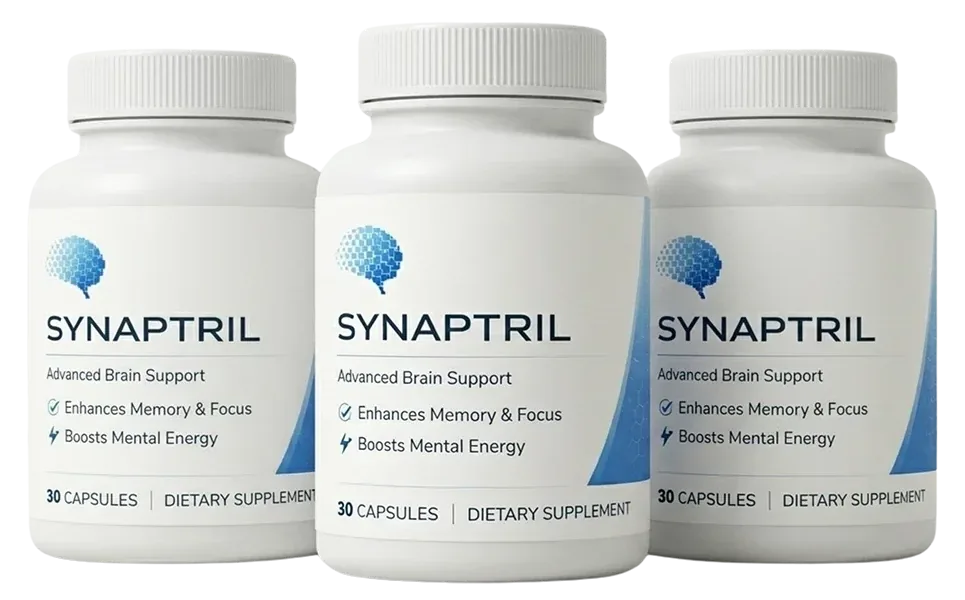
Synaptril: from $49 a bottle30 capsules · 2, 3 or 6 bottles · free shipping on 3 or 6 · 60-day guarantee
See packsSafety05
Is CoQ10 safe with warfarin and other medicines?
CoQ10 has been reported to reduce warfarin's effect, so anyone on warfarin should ask the prescriber first and expect an INR check (Linus Pauling Institute, Coenzyme Q10). That is the main safety flag for this line.
No serious side effects have been reported for CoQ10. Trouble sleeping or an upset stomach can occur (NCCIH, Coenzyme Q10).
CoQ10 does not appear to relieve statin muscle pain (NCCIH, Coenzyme Q10); see CoQ10 and statins.
Warfarin
CoQ10 may weaken it. Your prescriber may want an INR check after you start.
Sleep and stomach
Insomnia or digestive upset. If either appears, stop and tell a provider.
Under 18, pregnant, nursing
The Synaptril label says not for these groups.
Never skip a warfarin dose because you started a supplement. Read supplements and medicines before you combine them.
Mental energy06
Does CoQ10 boost mental energy?
CoQ10 has not been shown to boost mental energy. Its cell-energy role does not translate into a felt lift, and no trial has tested it for alertness at 35 mg.
Synaptril's front label says "Boosts Mental Energy*". Tufts researchers describe mental energy as mood, motivation and attention, and found supplement evidence inconsistent (Tufts, Mental Energy Claims).
Poor sleep and low B12 are treatable causes of fuzzy thinking worth checking (NIA, Memory Problems and Aging). More in CoQ10 and brain fog.
Verdict07
Is the CoQ10 in Synaptril worth having?
The CoQ10 in Synaptril is a token amount. At 35 mg or less, it sits at the low end of retail products and far below any brain trial.
Pros
- Form named: ubiquinone
- No serious side effects reported
- No stimulant effect
Cons
- At most about 35 mg, the smallest line
- Under 5% absorbed by mouth
- No cognitive benefit even at 2,400 mg
Compare all six amounts on the Synaptril ingredients page.
FAQ08
Coenzyme Q10 questions, answered
What form of CoQ10 is in Synaptril?
Synaptril uses ubiquinone. The label reads "Coenzyme Q 10 (as Ubiquinone)", the sixth and last line of the 575 mg proprietary blend. No amount is printed, and blend math puts the ceiling at about 35 mg.
Should I take Synaptril with a fatty meal because of the CoQ10?
It may help a little. CoQ10 absorbs best with a fatty meal, though under 5% of an oral dose reaches the blood. The Synaptril label gives no food rule, so a meal is a habit, not a requirement.
Is the CoQ10 in Synaptril enough to replace my CoQ10 supplement?
Probably not. Retail CoQ10 products usually give 30 to 100 mg a day, and Synaptril holds at most about 35 mg. If a doctor suggested a set CoQ10 dose, ask before swapping products.
Does CoQ10 interact with statins?
No interaction is named in our sources, but CoQ10 does not appear to relieve statin muscle pain, according to NCCIH. Keep taking your statin as prescribed, and ask your doctor about any new muscle symptoms.
Why is CoQ10 last on the Synaptril label?
It weighs the least of the six. Proprietary blends list ingredients from most to least by weight, so CoQ10 cannot outweigh turmeric extract, L-carnitine or any line above it. That is how the 35 mg ceiling is set.
Who wrote this09
Written and reviewed by
Pages built from the label, the sales page and linked NIH, FDA, CDC, FTC and peer-reviewed sources.
Last updated . Learn about our editorial standards and how we check reviews. This website is run by a U.S. retail partner of Synaptril, not by the manufacturer or the distributor. We make money when you buy through our order links.
Keep reading
Related Synaptril reading
U.S. retail partner of Synaptril
Ready to try Synaptril?
Check your medicines, then choose a pack. Packs of three or six bottles ship free at a lower price per bottle, and all of them carry the 60-day money-back guarantee.
- Secure BuyGoods checkout
- 60-day money-back guarantee
- Ships from the U.S.